
Identify the missing use first
Outerwear shopping easily becomes a sequence of isolated comparisons: one piece has an unusual color, another has a clean silhouette, and a third is discounted. Each has an advantage, yet at home they may cover the same use or pair poorly with current pants and shoes.
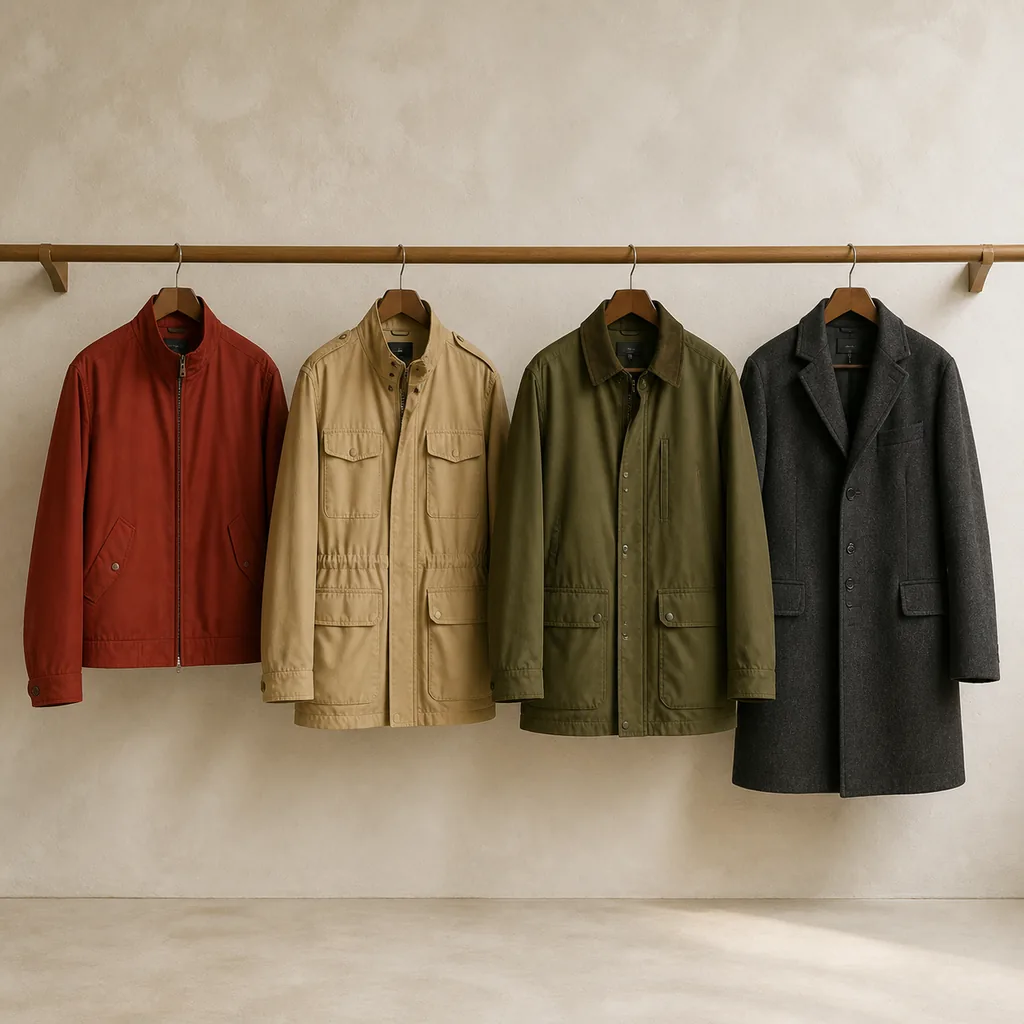
I first identify the missing use, then compare individual outerwear pieces. Color can quickly indicate how an outerwear piece will pair and where it will be worn. I use brick red, warm beige, olive, and charcoal to cover four uses.
This personal palette only helps reduce duplicate purchases. It makes no inference about complexion, gender, or seasonal color analysis. Any color can be replaced while the four uses remain complementary.
Give each color one primary use
| Color | Primary use | Common pairings | Duplicate to avoid |
|---|---|---|---|
| Brick red | Adds one warm focal point to a muted wardrobe | Black, gray, navy, denim blue, warm white | Several neighboring reds that all serve the same use |
| Warm beige | Raises overall lightness and connects pale colors with natural materials | White, brown, khaki, pale blue, olive | Fabric and silhouette too close to an existing khaki outerwear piece |
| Olive | Provides a quiet color with some distinction | Black, gray, brown, denim, muted warm colors | Treating army, moss, khaki, and gray-green as separate uses |
| Charcoal | Provides a calm, formal dark basic that pulls an outfit together | Almost every low- to medium-saturation color | Complete overlap in use and length with black or dark-gray outerwear pieces |
The pairings in the table come from my wardrobe; other combinations remain open to testing. The four main outerwear pieces should differ clearly in visual emphasis, lightness, and use.
Brick red: provide one warm focal point
Brick red is usually less saturated and browner than a vivid red while preserving the strongest focal point of the four colors. Once worn, the upper body usually attracts attention first.
I therefore choose a simple silhouette and restrained details. A short jacket, a clean work jacket, or a single-breasted design without large emblems lets the color stand out. Navy, charcoal, black, or warm-white tops and pants keep one main focal point.
Before buying, test whether the brick-red outerwear piece works with three existing pairs of pants, two pairs of shoes, and two frequently worn tops. A candidate that depends on one special outfit belongs with occasion clothing and does not count among the four main everyday outerwear pieces.
Warm beige raises overall lightness
Warm beige raises overall lightness and makes a gentle transition among white, wood, brown, and muted green.
Pale colors emphasize fabric texture and cleanliness. Crisp cotton, suede, wool, and light synthetic fabric suit different seasons and levels of formality even at similar hues. Marks on cuffs, collars, and pocket edges also become more visible. Evaluate silhouette, cleaning, and storage together.
If the wardrobe already has several khaki or pale-brown outerwear pieces, a new warm-beige piece should add a clear difference in length, material, or temperature range.
Olive stays quiet while remaining distinctive
Olive has low saturation and moderate visual weight. It pairs easily with denim, black, gray, brown, and brick red.
Product names often divide similar colors into army, moss, forest, and gray-green, although they may serve the same wardrobe use. Place the outerwear piece beside existing clothes and check whether its lightness, undertone, and fabric sheen create new pairings.
Olive suits work jackets, field jackets, and short parkas with some structure. When pockets, drawcords, epaulettes, and hardware are already prominent, simple supporting clothes keep the visual emphasis clear.
Charcoal serves as the dark basic
Charcoal is the dark basic among the four colors. It shows more textile detail than pure black and reduces the visual weight of a complicated top. It suits commuting, moderately formal occasions, and days that need a quick combination.
Differences among charcoal outerwear pieces come mainly from silhouette and length. A short jacket feels precise, a hip-length outerwear piece supports frequent movement, and a long coat changes the body’s vertical proportion. If a black short jacket already exists, prioritize a different length or temperature range.
I inspect charcoal in daylight for blue, brown, or nearly black undertones and compare it with pants I actually wear. Pure backgrounds and uniform exposure in online photographs can conceal the differences among dark colors that affect real outfits.
Check four conditions after choosing the color
After choosing the color’s use, compare specific outerwear pieces with four conditions:
- Occasion: does it cover a real gap in commuting, walking, travel, social life, or weather?
- Silhouette: do length, shoulder line, and volume hold frequent underlayers while differing from existing outerwear pieces?
- Pairing: without buying another top, can it form at least three outfits with current pants and shoes?
- Cleaning and storage: do staining, pilling, lint, rain, cleaning, and storage costs match expected frequency?
When returns are possible, run a try-on test at home. In daylight, pair the candidate with the most frequently worn, most difficult, and nearest-to-retirement outfits. Record successful combinations and the reasons others fail. The candidate should expand the wearable combinations already in the wardrobe.
Keep one main outerwear piece for each use
I define one main outerwear piece for each color by temperature range, occasion, and silhouette. For example:
- brick red: a short outerwear piece for mild weather;
- warm beige: a light commuting piece for spring and autumn;
- olive: an everyday utility piece that tolerates wind and rain;
- charcoal: a longer and more formal piece for cold weather.
When a candidate duplicates one of these uses, choose the outerwear piece it would replace before starting a trial period. Decide where the older piece will go when the trial ends, so outerwear pieces with the same use do not accumulate as backups.
Check before buying
When I encounter an outerwear piece, I now ask in this order:
- Which of the four uses does it cover, and is there a clear reason to add a fifth?
- Does the wardrobe truly lack the occasion, temperature range, or silhouette it covers?
- Does the color pair with current clothes in daylight?
- Can it immediately form at least three frequent outfits without new supporting purchases?
- Is it still comfortable while sitting, reaching, carrying a bag, and adding an underlayer?
- Do cleaning, lint, storage, and weather constraints match expected use?
- If it overlaps an existing outerwear piece, has the replacement been named?
These four colors can change with a personal wardrobe. Before buying, identify the use or pairing the new outerwear piece adds; this gives an attractive piece a better chance of being worn regularly.
Comments
Comments are public and stored in GitHub Discussions. This page connects to giscus.app and GitHub and sends the current page path only after you show comments manually or enable automatic loading. The first load is about 0.13 MB; actual usage varies with comment content. Do not include private information.